What Is a B General Building Contractor License in California?
Content table
- What Is a B General Building Contractor License in California?
- Who Needs a B General Building Contractor License in California?
- Should You Get a B License or a B-2 License?
- California B Contractor License Requirements Before You Apply
- Step-by-Step: How to Get a General Building Contractor License in California
- How the CSLB Application Process Works for a B Contractor License
- Exams Required for a California B Contractor License
- Additional Licensing Requirements: The Final Steps
- How Long It Takes To Get a B Contractor License in California
- Tips Before Applying for a California B Contractor License
- California B Contractor License FAQ
If you want to build, remodel, or supervise larger construction projects in California, the B General Building Contractor License is usually the license people are talking about when they say, "I want to become a general contractor."
Let me explain it this way: the B license is not just a "do everything" license. It is a building contractor license with a specific scope. It is designed for contractors whose work involves structures and multiple building trades, such as framing, electrical, plumbing, drywall, concrete, roofing, finish carpentry, and other related work.
In California, a contractor license is generally required when a construction project reaches $1,000 or more in labor, materials, and other project costs, or when the work requires a permit or workers. That threshold matters because many people start out doing smaller projects and eventually reach the point where getting licensed is no longer optional if they want to grow legally and professionally.
In this guide, I'll walk you through the process in straightforward terms: who needs a B license, how the B license differs from the B-2 classification, how the two-trade rule works in real situations, what experience you need, what exams to prepare for, and what final steps must be completed before your license can be issued.
Quick answer: To get a General Building Contractor License in California, you need to be at least 18 years old, have at least four years of qualifying journey-level experience within the past 10 years, submit the proper license application, pass the required exams unless you qualify for a waiver, complete fingerprinting, and meet the final bond, insurance, fee, and asbestos open-book exam requirements.
Who Needs a B General Building Contractor License in California?
The B General Building Contractor License is designed for contractors who build, improve, or remodel structures that require the coordination of multiple building trades. Consider this your go-to classification if you plan to tackle:
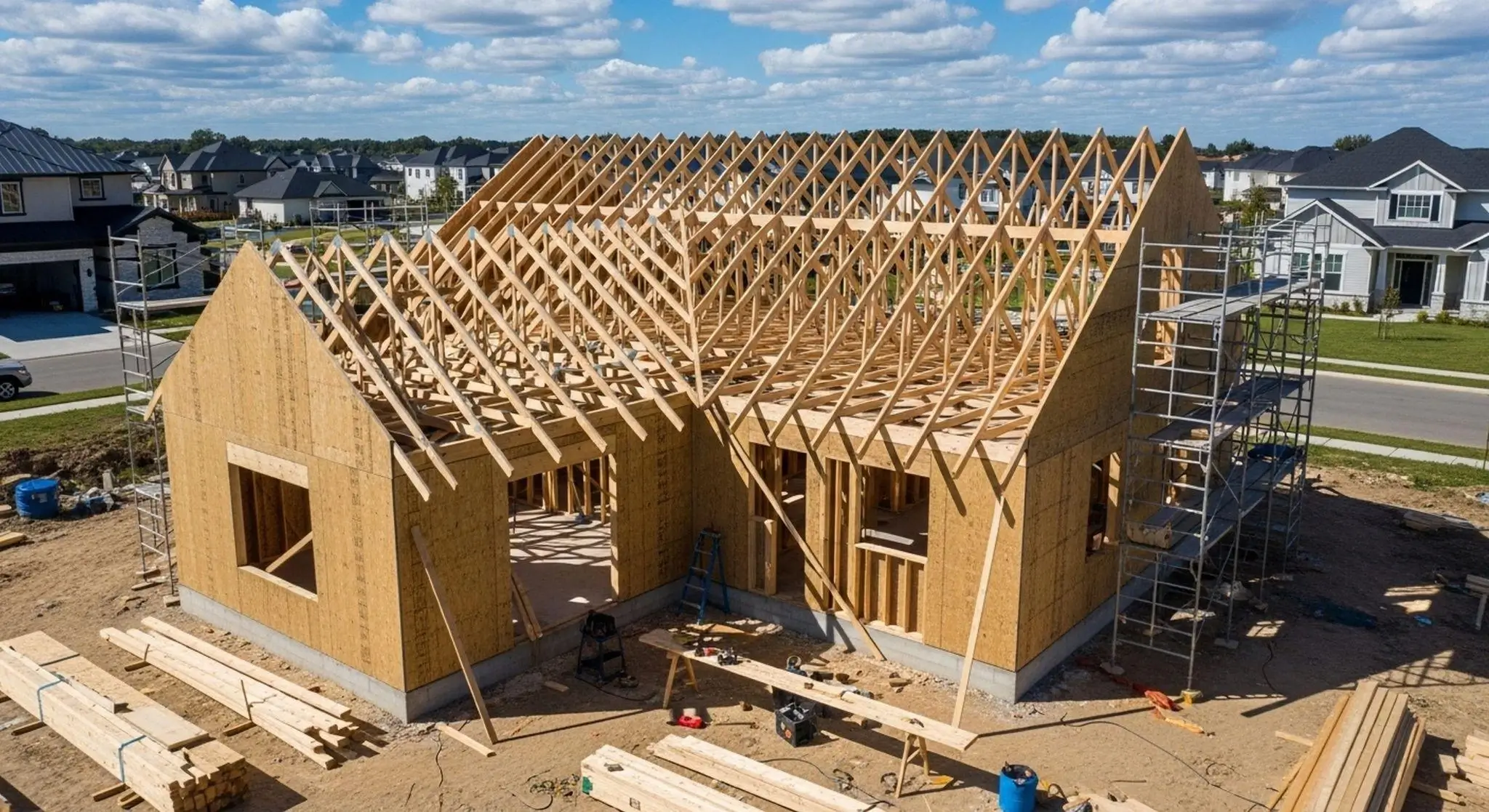
- New home construction
- Room additions and garage conversions
- Structural remodels
- Major residential or commercial renovations
- Projects where subcontractors are supervised under one general contract
In simple terms, if your goal is to oversee building projects rather than specialize in one trade, the B license is usually the classification to consider.
What Is the Two-Trade Rule for a B Contractor License?
One of the most misunderstood parts of the B license is the two-trade rule.
The B classification is intended for projects involving a structure and the coordination of multiple building trades or crafts. A common example would be a kitchen remodel involving plumbing, electrical, drywall, cabinets, flooring, and finish work under one contract.
However, framing and carpentry are treated differently under this rule.
A B contractor may take a framing or carpentry project by itself. But when a project includes trades beyond framing or carpentry, the project generally must involve at least two unrelated building trades other than framing or carpentry.
That is the part many applicants miss.
For example, framing plus painting by itself does not usually satisfy the two-trade rule because framing and carpentry do not count as one of the two unrelated trades. But a remodel involving plumbing and electrical, or electrical and drywall, is different because those are unrelated trades outside of framing and carpentry.
Can a B Contractor Take a Single-Trade Contract?
This is another point that needs to be explained carefully.
A B General Building Contractor may enter into a contract for work involving a single trade. However, the contractor must either:
- Hold the appropriate specialty classification and self-perform the work, or
- Subcontract the work to a properly licensed specialty contractor.
For example, a B contractor may sign a contract for a roofing project. But unless that contractor also holds the C-39 Roofing classification, the roofing work must be performed by a licensed C-39 contractor.
The same principle applies to trades such as electrical, plumbing, HVAC, painting, and many other specialty classifications. A B license gives a contractor broad contracting ability, but it does not automatically authorize the contractor to self-perform every specialty trade.
Here are a few practical examples:
| Project | How It Usually Applies to the B License |
|---|---|
| Framing-only project | A B contractor may perform this work. |
| Kitchen remodel with plumbing and electrical | Generally fits the B classification because multiple unrelated trades are involved. |
| Bathroom remodel with plumbing, electrical, and tile | Generally fits the B classification because multiple unrelated trades are involved. |
| Roofing-only project | A B contractor may contract for it, but must hold C-39 to self-perform or subcontract to a licensed C-39 contractor. |
| Electrical-only project | A B contractor may contract for it, but must hold C-10 to self-perform or subcontract to a licensed C-10 contractor. |
| Framing plus painting only | Usually not enough by itself to satisfy the two-trade rule because framing/carpentry does not count as one of the two unrelated trades. |
A B contractor can contract for a wide variety of projects, but specialty trade work must either be subcontracted to the appropriately licensed contractor or performed under a license that authorizes that specific trade.
Should You Get a B License or a B-2 License?
Another common source of confusion is the difference between the B General Building Contractor License and the B-2 Residential Remodeling Contractor License.
Although both classifications can involve remodeling and improvement work, they are not the same license.
The B license is intended for general building work and may include new construction, additions, structural remodels, framing, and projects involving multiple trades.
The B-2 license is designed for residential remodeling work on existing wood-frame homes and is generally limited to non-structural improvements.
| B General Building Contractor | B-2 Residential Remodeling Contractor |
|---|---|
| Can include new construction | Existing residential structures only |
| Can include structural remodels | Non-structural remodeling only |
| Can include additions and framing projects | No structural additions or load-bearing modifications |
| Follows the B two-trade rule | Requires three or more unrelated trades on a remodeling project |
| Can apply to residential and commercial work | Focused on residential remodeling |
Which License Should You Choose?
For most applicants pursuing a career as a traditional general contractor, the B license is the more versatile option. It allows contractors to perform or supervise a broader range of work, including new construction, additions, structural remodels, framing, and multi-trade building projects.
The B-2 classification may be worth considering if your business focuses exclusively on non-structural residential remodeling of existing homes.
If you plan to build, frame, add square footage, perform structural work, or manage larger construction projects, the B General Building Contractor License is usually the better fit.
California B Contractor License Requirements Before You Apply
Before you apply for the B General Building Contractor License, you need to make sure you are eligible.
The basic requirements are relatively straightforward. You must:
- Be at least 18 years old.
- Have at least four years of journey-level experience within the past 10 years.
- Have a Social Security Number (SSN) or Individual Taxpayer Identification Number (ITIN).
What counts as journey-level?
This doesn't just mean you've "been around" construction. It means you are no longer a helper or trainee. You can perform or supervise the work independently.
More specifically, it means you have experience at the level of a journeyman, foreman, supervising employee, contractor, or owner-builder.
For a B license, your experience should demonstrate that you know how a building comes together — planning, sequencing, safety, code awareness, and trade coordination.
Step-by-Step: How to Get a General Building Contractor License in California
Here is a detailed licensing path I usually recommend students follow.
Step 1: Make Sure Your Experience Qualifies
Before you submit anything, review your work history carefully. Your experience should line up with the B General Building classification, not just general construction labor.
For example, someone who has spent four years only installing flooring may have solid trade experience, but that does not automatically equal B General Building experience. On the other hand, someone who has supervised remodels, coordinated trades, worked on framing, managed job sequencing, and handled multi-trade building projects is usually telling a stronger B license story.
Step 2: Choose Your Business Structure
You can apply as a sole owner, partnership, corporation, LLC, or another qualifying entity type. Your business structure affects how the license is set up, who qualifies the license, what bond and insurance requirements apply, and how the business operates after the license is issued.
This is also the point where you should decide whether you are qualifying the license yourself or using a qualifying individual, such as a Responsible Managing Employee (RME) or a Responsible Managing Officer (RMO).
Step 3: Complete the License Application
The main form for a new license is the Application for Original Contractor License. This is where you identify the business, the qualifier, the license classification, the experience being claimed, and the other details required for a complete application.
The current application includes detailed instructions, and those instructions matter. A complete and accurate application is one of the biggest factors in avoiding unnecessary delays.
This is also one of the reasons many applicants seek assistance before submitting their application. It is much easier to prepare the application correctly the first time than to fix problems after it has already been submitted.
Step 4: Submit Your Application and Fee
Once the application is complete, you submit it with the required application fee to the CSLB. After it is received and processed, you will be notified about the next steps.
If the application is incomplete, unclear, or inconsistent, it may be returned for corrections. That can add weeks or longer to the process.
Step 5: Complete Fingerprinting
After your application is accepted, you will receive fingerprinting instructions. These documents are commonly referred to as Live Scan request forms, and they are used for the required background check.
You have the option of completing Live Scan fingerprinting when you receive the forms, or you generally have 90 days to complete it after successfully passing the required examinations. Naturally, the sooner you complete it, the better.
Step 6: Prepare for and Pass the Exams
Most applicants must pass two exams: the California Law and Business Examination and the B General Building Trade Examination.
Step 7: Complete the Final License Requirements
Passing the exams does not automatically issue the license. After you pass, you still need to complete final items such as:
- The initial license fee
- Contractor bond
- Workers' compensation documentation or exemption
- Asbestos open-book exam
- Live Scan fingerprinting if it was not completed earlier
- Any entity-specific requirements
These details are usually outlined in a letter or packet sent by the CSLB after you pass the required exams.
Step 8: Receive Your Active License
Once all requirements are met and approved, your license can be issued. At that point, you can begin operating as a licensed contractor within the scope of your classification.
How the CSLB Application Process Works for a B Contractor License
The CSLB application process is where a lot of licensing delays begin, and most of those delays are preventable.
When students attend my classes, I often ask them, "How long did it take for the CSLB to process your application?" That question almost always sparks a conversation.
Some students share that their applications moved through the process smoothly. Others, especially those who tried to figure everything out on their own before coming to class, often share their frustrations: returned applications, unclear experience descriptions, missing signatures, incorrect classifications, or delays caused by documents that did not match.
Many students who followed Contractors Intelligence School's guidance from the beginning found the application process to be smoother and encountered fewer issues. That is not because the CSLB treated them differently. It is because their applications were cleaner, clearer, and better prepared before they were ever submitted.

Without getting lost in all of the forms, instructions, and supporting documents, the application is really designed to answer three basic questions:
- Who is applying for the license?
This includes the business name, entity type, address, and personnel. - Who is qualifying the license?
This is the person whose experience is being used to qualify for the classification. - What experience supports the classification?
For the B license, this should show real general building experience, not vague construction activity.
Students who take the time to document their experience clearly have far fewer issues than those who rush. Treat the application as your proof that you belong in this industry.
Exams Required for a California B Contractor License
Most applicants for a California B General Building Contractor License are required to pass two examinations: the California Law and Business Examination and the B General Building Trade Examination.
California Law and Business Examination
The Law and Business exam covers the legal and administrative side of operating a contracting business in California. Topics include contractor licensing requirements, contracts, business organization, employment regulations, liens, insurance, safety responsibilities, and other laws that affect licensed contractors.
B General Building Trade Examination
The B General Building trade exam focuses on the technical knowledge required for general building work. Topics may include planning and estimating, framing, foundations, concrete, plumbing, electrical, HVAC, roofing, finishes, safety, and jobsite coordination.
Which Exam Is Harder?
After explaining the exam requirements, one of the first questions students usually ask is: "Which test is harder, the law exam or the trade exam?"
My answer is almost always the same: it depends on your experience.
Applicants who spend most of their time working in the field often find the trade exam more familiar because it covers many of the concepts they encounter on a daily basis. They are accustomed to thinking about construction methods, building systems, materials, and jobsite operations.
On the other hand, applicants whose experience is primarily supervisory or administrative often find the Law and Business exam easier. Many of these individuals regularly work with contracts, scheduling, compliance requirements, business operations, and project management, so the exam content feels more familiar.
What surprises many applicants is that the exam they worry about the most is not always the one they struggle with. An experienced carpenter may discover that contractor law, contracts, and business regulations require more study than expected. Likewise, a project manager or superintendent may find that some technical construction questions require additional preparation.
For that reason, I encourage students to approach both exams with the same level of seriousness.
Additional Licensing Requirements: The Final Steps
Passing the exams is a major milestone, but it does not automatically activate your contractor license. Once you pass the required examinations, the CSLB provides a 90-day window to complete any remaining licensing requirements before your license can be issued.
For most applicants, those final steps include:
- Paying the initial license fee
- Filing the required contractor bond
- Providing workers' compensation insurance information or a valid exemption
- Completing the asbestos open-book examination
- Completing Live Scan fingerprinting if it was not completed earlier
- Submitting any additional documents requested by the CSLB
Most applicants receive these instructions in the post-exam licensing packet sent by the CSLB.
Contractor Bond
Before an active license can be issued, a contractor license bond must be on file with the CSLB. Most applicants obtain the required bond through a licensed surety company and have it filed with the CSLB.
Workers' Compensation Insurance or Exemption
Before your license can be issued, the CSLB must have either proof of workers' compensation insurance or a valid exemption on file.
Many owner-operated contractors without employees qualify for an exemption, while contractors with employees are generally required to maintain workers' compensation coverage. For a more detailed explanation of California's workers' compensation requirements, see our guide: Do California Contractors Need Workers' Comp?
Asbestos Open-Book Examination
All new license qualifiers must complete the asbestos open-book examination. This requirement is designed to increase awareness of asbestos-related hazards and regulations.
Completing the examination does not authorize a contractor to perform asbestos abatement work.
Special Situations and Additional Requirements
Some applicants have additional requirements based on their business structure or qualifying individual.
- LLC Applicants: Limited Liability Companies have additional licensing requirements. In addition to the standard contractor bond, LLCs are generally required to maintain an LLC Employee/Worker Bond and meet CSLB liability insurance requirements.
- Responsible Managing Employees and Certain RMOs: A Bond of Qualifying Individual may be required when the license is qualified by an RME or by an RMO who owns less than 10% of the business entity.
If your application falls into one of these categories, the CSLB will provide instructions regarding any additional documents needed before the license can be issued.
How Long It Takes To Get a B Contractor License in California
One of the most common questions applicants ask is: "How long does it take to get a California contractor license?"
For most applicants, the process takes approximately 2 to 6 months from the time the application is submitted until the license is issued.
Several factors can affect the timeline:
Application Review
Most applicants receive an acknowledgment letter within 2 to 4 weeks after submitting their application. Incomplete applications, missing information, or unclear work experience certifications can significantly delay processing.
Exam Scheduling
Once the application is accepted, applicants may schedule their exams through PSI. Appointments are often available within 2 to 4 weeks, depending on location and availability.
If an applicant fails an exam, the CSLB requires a 21-day waiting period before retesting.
Background Check
Live Scan fingerprint results are often processed within a few days. However, applications requiring additional review may take longer.
Final License Issuance
After passing the required exams, applicants must complete their remaining licensing requirements. Once all required documents have been received, final processing and license activation generally takes about 1 to 2 weeks.
The best way to avoid delays is to submit a complete application, prepare thoroughly for the exams, and promptly complete any remaining licensing requirements.
Tips Before Applying for a California B Contractor License
Before you apply for a B General Building Contractor License, take a step back and look at the whole picture.
First, make sure the B classification matches your actual work. The B license is powerful, but it has rules. It is not a universal permission slip for every construction task.
Second, make sure your experience tells the right story. If you are applying for a general building license, your experience should show general building work, not only one isolated trade.
Third, prepare for both exams. Do not assume field experience alone will carry you through the Law and Business exam. Many good builders need focused preparation for the legal, business, and administrative side of contracting.
Finally, remember why the license matters. Getting licensed is not just about passing a test. It is about being able to bid larger jobs, build trust with clients, pull permits when required, grow your business, and operate legally in California.
At Contractors Intelligence School, we teach students to approach the process with three goals: choose the right classification, submit a clean application, and prepare seriously for the exams. When you do those three things well, the path to getting licensed becomes much easier to understand.
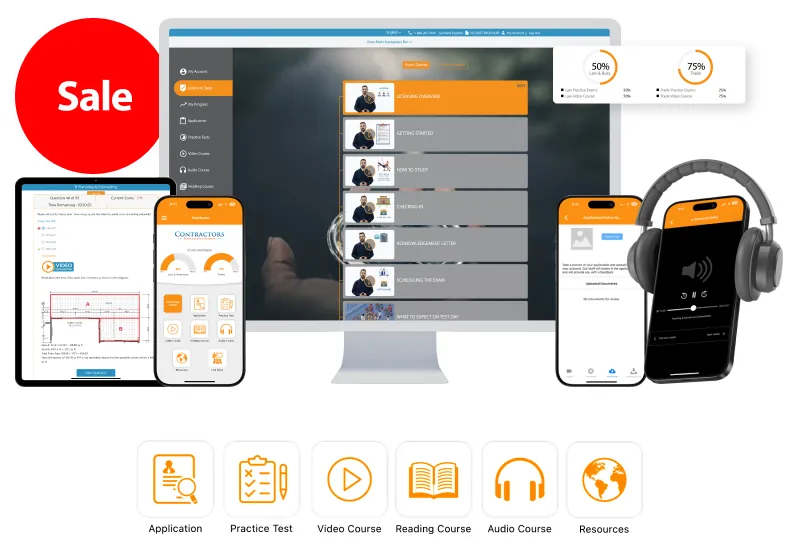
Explore our free demo account today!
California B Contractor License FAQ
What is a B General Building Contractor License in California?
A B General Building Contractor License allows a contractor to work on general building projects involving structures and multiple building trades. It is commonly used for new construction, additions, remodels, framing, and projects that require coordination of different trades.
What is the difference between a B and B-2 contractor license?
The B license is broader and may include new construction, additions, structural remodels, framing, and general building projects. The B-2 license is limited to non-structural residential remodeling work on existing wood-frame structures and requires at least three unrelated trades under one contract.
What is the two-trade rule for a B contractor license?
When a B contractor takes a project involving trades other than framing or carpentry, the project generally must include at least two unrelated trades other than framing or carpentry. Framing and carpentry can be part of the project, but they generally do not count as one of the two unrelated trades needed to satisfy the rule.
Can a B contractor do a roofing-only or painting-only job?
A B contractor may contract for a single-trade project, such as roofing or painting, but the work must either be subcontracted to a properly licensed specialty contractor or performed by the B contractor only if the contractor also holds the appropriate specialty classification.
How long does it take to get a B contractor license in California?
The timeline varies depending on application accuracy, CSLB processing times, fingerprinting, exam scheduling, background review, and how quickly final documents are submitted. Applicants should check current processing times and plan for the process to take several months.
Published on: June 6, 2026




 $495.00

 Live Streaming Class
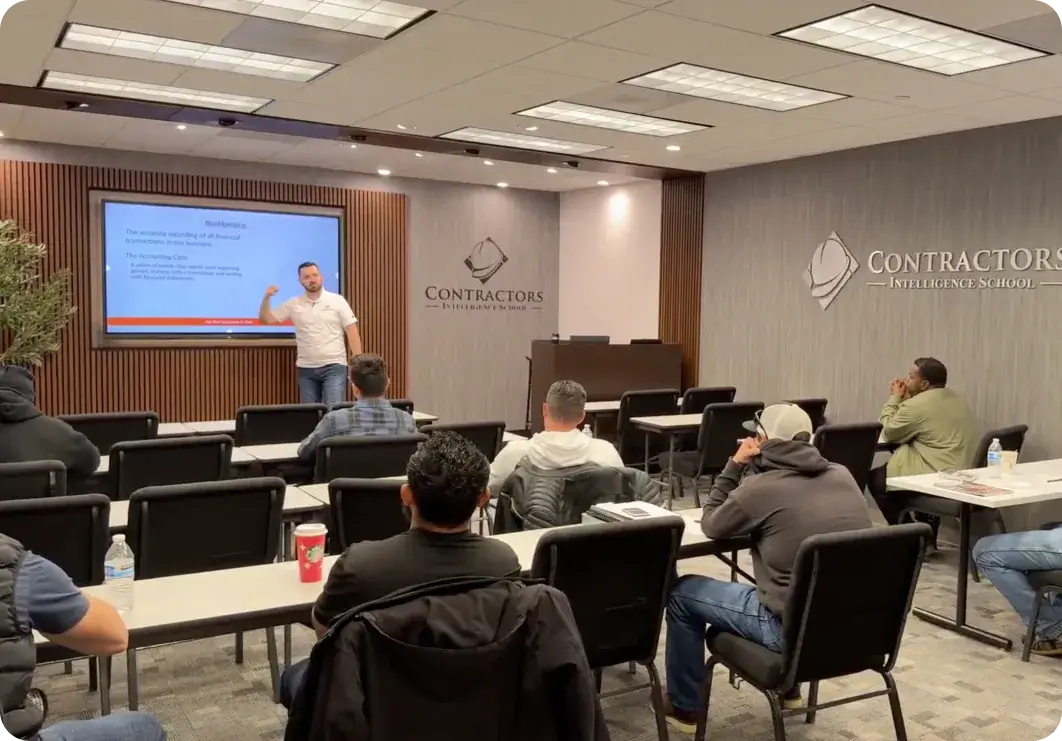


 Limited Time Offer | Save $500
 Full Online Course